Skip to content

Edinburgh Europa Institute Jean Monnet Centre of Excellence

A multi-disciplinary research centre looking at governance, institutions, law and policies of Europe and the EU

  • Home
  • About
  • Jean Monnet Centre of Excellence
  • Events
  • Blog: FUTURES
  • Contact

Category: Foreign Affairs

The Dutch Ukraine Referendum That Was Never Really About Ukraine

David Bokhorst and Bogdan Koetsier The recent Dutch referendum on the EU-Ukraine Association Agreement, which rejected the agreement, was more an expression of Euroscepticism than an evaluation of the actual …
5th May 2016 lewing

NATO’s Role in the Refugee Crisis: Building Bridges with the EU

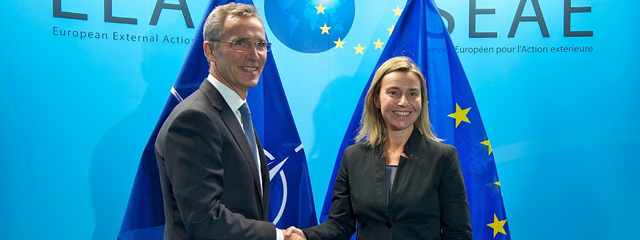
Nina Græger The activities that NATO has undertaken to address the refugee crisis in the Mediterranean focus on intelligence and surveillance, and are designed to complement the efforts of the …

25th April 2016 lewing

Switzerland: China’s Old Friend and Innovative Strategic Partner

Shichen Wang While the EU continues to be divided on China, Switzerland has continued its longstanding privileged relationship with the country, writes Shichen Wang. He argues that China has favoured …

18th April 2016 lewing

On Different Tracks: Bulgaria and Romania under the Cooperation and Verification Mechanism

Eli Gateva Romania and Bulgaria both joined the EU in 2007 and became subject to an ad hoc tool created by the European Commission to evaluate the progress of the …

2nd March 2016 lewing

Bosnia’s EU Candidacy Cannot be Sustained by Minimal Internal Compromises

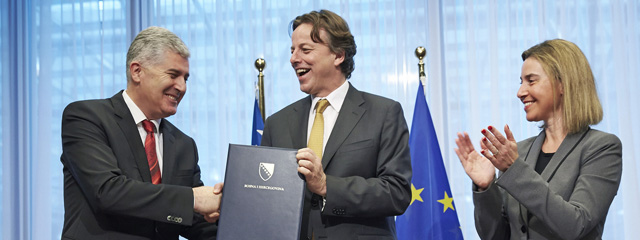
Andy Aitchison Bosnia’s formal application for EU membership, received today, is predicated on a new and untested framework for the country’s political entities to cooperate with each other, writes Andy …

15th February 2016 lewing

The EU’s Relations with Kosovo – Achievements, Limits, Challenges

Gëzim Krasniqi The EU plays a major role in Kosovo’s development, despite the fact that several Member States do not recognise its independence, writes Gëzim Krasniqi. While the recently signed …

18th December 2015 lewing

Britain’s Response to the Refugee Crisis in the Mediterranean

Gareth Mulvey The UK Government’s approach to the current refugee crisis in Europe is a continuation of policies intended to discourage migration to Britain, writes Gareth Mulvey. He argues that …

16th December 2015 lewing

EU-Russia Relations: A Eurasian Opportunity?

Francesco Saverio Montesano The costs and challenges associated with EU-Russia relations at present demonstrate that the EU needs a functioning working relationship with Russia, writes Francesco Saverio Montesano. He argues …

11th December 2015 lewing

Turkey’s EU Perspective: How the Refugee Crisis has Accelerated Membership Negotiations

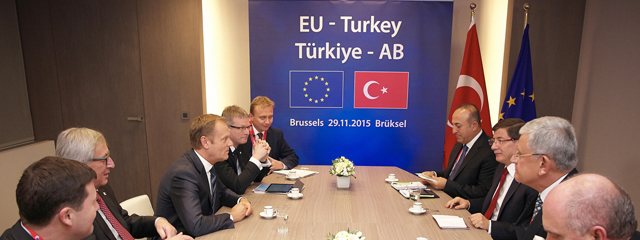
Renke Deckarm and Torsten Selck Turkey’s longstanding EU membership negotiations have been periodically delayed by reluctance from Member States, lack of progress in meeting the accession criteria and more recently …

8th December 2015 lewing

Will China Cooperate with the EU at the Paris Climate Conference?

Feng Cunwan China and other major developing countries will play an increasingly important role in global climate negotiations, writes Feng Cunwan. He suggests that, although China has recently adopted a …

4th December 2015 lewing

Posts navigation

«Previous Posts 1 2 3 Next Posts»

Search

Latest from our blog

Empirical Socio-Legal Research on the EU’s Externalisation of Asylum: Amalgamating Texts and Refugee Artworks?

Crowd waving Ukrainian flag

Sleeping BEaUty – The Revival of the EU Temporary Protection Directive

Asylum-seekers’ and refugees’ access to healthcare in Germany and the UK

EU flag and supported by Erasmus message
  • Terms and conditions
  • Privacy and cookies
  • Website accessibility
  • Freedom of information publication scheme

The University of Edinburgh is a charitable body, registered in Scotland, with registration number SC005336, VAT Registration Number GB 592 9507 00, and is acknowledged by the UK authorities as a “Recognised body” which has been granted degree awarding powers.

Unless explicitly stated otherwise, all material is copyright © The University of Edinburgh 2026.

Accessibility